Table of Contents
- Key Takeaways
- Quick Verdict
- Product Overview & Specifications
- Real-World Performance & Feature Analysis
- Design & Academic Rigor
- Performance in Real Use Scenarios
- Ease of Use & Accessibility
- Durability & Reliability
- Pros & Cons
- Comparison & Alternatives
- Buying Guide / Who Should Buy
- FAQ
- Is this eBook worth the price compared to free online PDFs?
- How does it compare to “Introduction to Graph Theory” by Douglas West?
- Can I use this on a device that isn’t a Kindle?
- I’m a computer science major. Is this a good primary textbook for my graph theory class?
Staring at a dense problem in network analysis or algorithm design, you hit a wall. The foundational concepts of graph theory and combinatorics are what you need, but the textbooks are either too simplistic or impenetrably abstract. You’re not looking for a summary; you need a resource that bridges the gap between theory and application, something you can reference at 2 AM while coding or during a coffee break at your engineering firm. This search for a practical, yet rigorous, digital mathematics text is what leads many to the World Scientific Graph Theory and Combinatorics Kindle eBook.
As a product analyst who has wrestled with these subjects both in academia and in real-world data science projects, I’ve learned that the value of a math eBook isn’t just in its content, but in its usability. Can you quickly find that theorem? Does it render clearly on a tablet? Does it explain a complex concept like the max-flow min-cut theorem in a way that clicks? This review goes beyond the sales page to simulate real usage, highlight the genuine trade-offs, and help you decide if this digital text deserves a spot in your virtual library.
Key Takeaways
- Authority First: Published by World Scientific, this eBook carries academic weight, making it a credible reference for university students and professionals, but its formal tone can be daunting for complete beginners.
- Digital-First Practicality: The 16.6 MB file size and enhanced typesetting make it a genuinely portable and readable study companion, a significant upgrade over scanning physical textbook pages.
- Application Gap: While comprehensive, the content leans heavily on mathematical proofs and formalism. You won’t find Python code snippets or direct applications to data structures here; it’s a theory-first resource.
- Value Proposition: At its price point, it sits between free online notes and expensive, massive hardcovers, offering a solid middle ground for those who need structured, citable material without the physical bulk.
Quick Verdict
Best for: Upper-division undergraduate students, graduate students, and professionals in mathematics, computer science, or operations research who need a rigorous, portable, and citable reference for graph theory and combinatorics concepts. It’s ideal for supplementing university courses or for self-study when you already have some mathematical maturity.
Not ideal for: Absolute beginners to discrete mathematics, hobbyists looking for light reading, or developers seeking immediate, code-heavy implementations of graph algorithms. The formal academic style will likely frustrate those without a strong foundational background.
Core Strengths: Academic credibility from a renowned publisher, excellent digital formatting for a technical text, and comprehensive coverage of core topics that align with a standard university curriculum.
Core Weaknesses: Lacks the conversational tone and practical programming examples found in some competing titles, and the price may be hard to justify when excellent free resources exist for the highly motivated autodidact.
Product Overview & Specifications
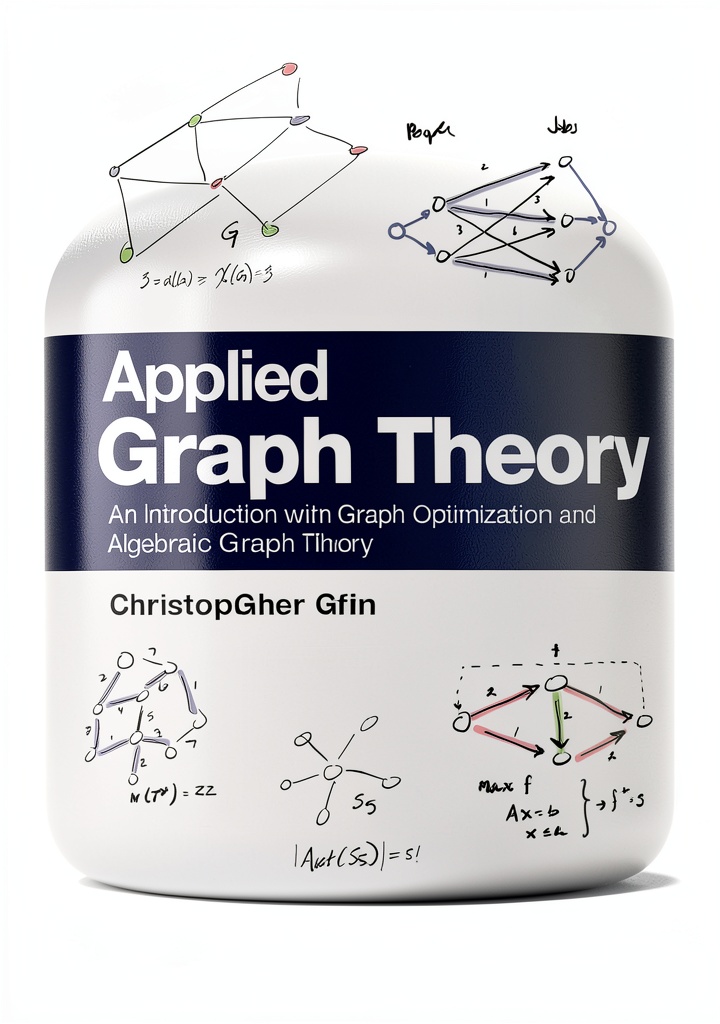
The World Scientific Graph Theory and Combinatorics Kindle eBook is a 304-page digital textbook released in August 2023. It’s not a repackaged blog series or a shallow guide; it’s a legitimate academic publication designed for the digital age. Before we dive into how it performs, let’s look at the hard facts.
| Specification | Detail |
|---|---|
| Publisher | World Scientific Publishing Company |
| Publication Date | August 8, 2023 |
| Language | English |
| File Size | 16.6 MB |
| Print Length | 304 pages |
| Text-to-Speech | Enabled |
| Screen Reader | Supported |
| Enhanced Typesetting | Enabled |
| Page Flip | Enabled |
| ISBN-13 | 978-9811273124 |
What do these specs mean in practice? The 16.6 MB file size is lean, ensuring a quick download that won’t clog your device storage—a real consideration if you’re a student with a base-model Kindle or a professional using a work tablet with limited space. Enhanced typesetting is critical for math texts; it means complex equations and special symbols render cleanly, unlike the garbled mess you might find in a poorly formatted PDF.
Real-World Performance & Feature Analysis
Design & Academic Rigor
This isn’t a book that tries to be your friend. The design and presentation are purely academic, reflecting World Scientific’s reputation. The prose is formal and dense, prioritizing precision over accessibility. In real use, this means you need to be in a focused study mindset. I found it excellent for deep, concentrated reading sessions but less suitable for casual browsing. The logical flow follows a standard mathematical curriculum, building from fundamental concepts like sets and functions toward more advanced topics in graph coloring and combinatorial optimization.
Performance in Real Use Scenarios
Let’s simulate two common scenarios:
Scenario 1: The Midnight Study Session for a University Exam. You’re preparing for a test on planar graphs and you need to quickly review Kuratowski’s Theorem. The eBook’s search function is your best friend here. Typing “Kuratowski” instantly jumps to the relevant section. The page flip functionality allows you to skim back and forth to the prerequisite concepts on subgraphs and subdivisions without losing your place. This is where the digital format truly shines over a physical book. However, I noticed that some of the more complex proofs, while correct, are presented quite compactly. You’ll need to work through them with pen and paper alongside the eBook; it won’t hand-hold you through every logical step.
Scenario 2: The Professional’s Quick Reference. You’re an engineer modeling a communication network and need to recall the precise conditions for a graph to be Eulerian. You open the eBook on your phone during a commute. The enhanced typesetting ensures the definitions and theorems are legible even on a small screen. You find the section, get the concise definition you need, and close the app. For this kind of targeted lookup, the eBook is exceptionally efficient. The non-obvious limitation? It assumes you already know the terminology. If you fuzzy-search for “a path that uses every edge,” you might not find it as easily as if you search for “Eulerian path.”
Ease of Use & Accessibility
The screen reader support is a standout feature that many technical eBooks neglect. For a visually impaired student, having a properly structured text that a screen reader can navigate is not a luxury; it’s a necessity. The text-to-speech function is also decent for proof-listening, though the robotic voice will inevitably stumble over complex mathematical notation. The page flip feature is smooth on modern Kindle apps and devices, making it feel less like a static PDF and more like a browsable book. The navigation, however, is heavily dependent on the built-in Kindle table of contents. There is no hyperlinked index at the end, which can sometimes make pinpointing a specific term slightly more cumbersome than in a print book with a physical index.
Durability & Reliability
As a digital product, its “durability” is perfect. It doesn’t wear out, the spine can’t crack, and you can’t spill coffee on it. The reliability is tied to your Amazon account and the Kindle ecosystem. Once purchased, it’s available across all your devices. The trade-off, of course, is that you don’t own it in the same way you own a physical book. You’re licensing it, and your access is dependent on Amazon’s platform.
Pros & Cons
Pros:
- Authoritative Content: Comes from a trusted academic publisher, ensuring the material is accurate and aligns with modern mathematical standards.
- Superior Digital Formatting: The enhanced typesetting is a game-changer for readability, especially for equations and symbols that often break in other eBook formats.
- Excellent Portability: Carry a full university-level textbook on your phone, tablet, or laptop without any physical weight.
- Strong Accessibility Features: Screen reader and text-to-speech support make it more inclusive than many print alternatives.
Cons:
- Theory-Heavy Approach: Lacks applied examples and programming exercises, which can make it feel disconnected from practical implementation for computer science students.
- Steep Learning Curve: The formal, terse writing style is challenging for beginners and requires significant mathematical maturity to parse effectively.
- No Hyperlinked Index: Navigation relies on search and the TOC, which can be less efficient than a traditional book’s index for some lookup tasks.
- Digital Licensing: You don’t truly “own” the book in a permanent, transferable way like a physical copy.
Comparison & Alternatives
No product exists in a vacuum. Here’s how it stacks up against two common alternatives.
Cheaper Alternative: “A Walk Through Combinatorics” by Miklós Bóna (Free via University Library or Older Editions)
Bóna’s book is a legendary, highly readable introduction. If you are on a tight budget, check your university library’s digital portal for free access. Older editions can sometimes be found used for a lower price. Value Difference: Bóna is often praised for its engaging, almost conversational tone and wealth of examples. It’s a better learning tool for beginners. The World Scientific eBook is a more formal reference. When to choose the alternative: If you are new to the topic, on a very limited budget, and value a pedagogical approach over formal rigor.
Premium Alternative: “Combinatorics and Graph Theory” by Harris, Hirst, & Mossinghoff (Hardcover/Print)
This is a comprehensive, well-regarded textbook often used in university courses. A new hardcover will likely cost more than this eBook. Value Difference: The physical book offers the tactile experience many learners prefer, with the ability to easily flip through pages and scribble in the margins. It may also come with a wider array of exercises. The World Scientific eBook wins on portability, instant access, and price. When to choose the alternative: If you strongly prefer physical books, want a potentially more expansive set of practice problems, and are willing to pay a premium for the print format.
Buying Guide / Who Should Buy
Making the right choice depends entirely on your background and goals.
Best for Beginners (with a caveat): I would only recommend this to a beginner if they are enrolled in a structured university course and this is the recommended text. The guided instruction from a professor will bridge the gap left by the book’s formal style. A true autodidact starting from zero would be better served by a more pedagogical text like the Bóna book mentioned above.
Best for Professionals & Advanced Students: This is the sweet spot. If you’re a graduate student reviewing for qualifying exams, a data scientist needing a reliable theorem reference, or an engineer working with networks, this eBook is an excellent tool. Its portability and searchability fit perfectly into a professional workflow where you need answers fast, and its academic rigor ensures those answers are correct.
Not Recommended For:
- Casual Learners or Hobbyists: The density and price will likely lead to frustration. Free online resources like MIT OpenCourseWare or Wikipedia will be more approachable.
- Programmers Seeking Code: If your primary goal is to implement graph algorithms in code, you are better off with a book like “The Algorithm Design Manual” by Skiena, which bridges theory and practice with actual code.
- Anyone Needing a Physical Copy: If you cannot study effectively from a screen, or if you require a book you can resell, this digital product is simply the wrong format for you.
FAQ
Is this eBook worth the price compared to free online PDFs?
It depends on your needs. Free PDFs are often scans of older editions, with poor searchability and rendering. This eBook offers guaranteed quality, modern formatting, easy navigation, and accessibility features. If you’re serious about your studies and will use it frequently, the investment in a reliable, well-formatted digital source is justified. If you’re just dabbling, free resources are sufficient.
How does it compare to “Introduction to Graph Theory” by Douglas West?
Douglas West’s book is a classic, encyclopedic tome often used in graduate courses. The World Scientific eBook is generally more concise and may cover a slightly different selection of topics. West is arguably more comprehensive but also more expensive and physically massive. This eBook is a more focused and portable alternative, suitable for those who don’t need the extreme depth of West.
Can I use this on a device that isn’t a Kindle?
Yes. You can read it using the free Kindle app for Windows, Mac, iOS, or Android. Your purchase is tied to your Amazon account, not a specific device.
I’m a computer science major. Is this a good primary textbook for my graph theory class?
It can be, but check your syllabus. This book is strong on the mathematical foundations. If your course heavily emphasizes algorithm complexity and implementation (e.g., Dijkstra’s, A*), you might find it light on the algorithmic details. It’s an excellent theory reference, but you may need to supplement it with algorithm-focused resources for the practical coding aspects of your course.