Table of Contents
- Key Takeaways
- Quick Verdict
- Product Overview & Specifications
- Real-World Performance & Feature Analysis
- Design & Build Quality (The Digital Equivalent)
- Performance in Real Use: Two Scenarios
- Ease of Use & Navigation
- Durability & Long-Term Value
- Pros & Cons
- Pros
- Cons
- Comparison & Alternatives
- Cheaper Alternative: “A First Course in Graph Theory” by Gary Chartrand & Ping Zhang (Dover Publications)
- Premium Alternative: “Graph Theory” by Reinhard Diestel (5th Edition, Springer)
- Buying Guide / Who Should Buy
- Best For Beginners?
- Best For Professionals & Advanced Students
- Not Recommended For
- FAQ
Searching for the right academic textbook is a specific kind of problem. You’re not just buying a book; you’re investing in a tool for understanding complex concepts that will form the foundation of your work or studies. When it comes to a field as nuanced as graph theory and discrete mathematics, the choice becomes even more critical. The medium matters as much as the message. A poorly formatted digital textbook can turn a challenging subject into an impossible one.
Having used countless academic ebooks over my career, from my PhD in Computer Science to my current role analyzing complex networks, I’ve learned that the promise of a “Kindle edition” can be deceptive. The Springer Graph Theory Discrete Mathematics Kindle edition sits in a unique niche—it’s a reputable publisher’s content delivered in Amazon’s ecosystem. But does this digital version live up to the demands of serious academic study, or does it fall into the common traps of mathematical ebooks? This review goes beyond the specs to test its performance in real-world scenarios, from late-night study sessions to professional research.
Key Takeaways
- Print Replica is a Double-Edged Sword: It perfectly preserves the original textbook layout, which is essential for complex diagrams and equations, but it sacrifices the reflowable text and font customization that make other Kindle books so accessible.
- Ideal for Referential, Not Cover-to-Cover, Reading: This format shines when you need to quickly reference a specific theorem or diagram, but can be cumbersome for prolonged, linear reading sessions on a standard Kindle device.
- A Niche Product for the Academically Committed: This is not a casual purchase. It’s best suited for university students, graduate researchers, and professionals who specifically need the authority of a Springer text and value digital portability over physical convenience.
- Device Compatibility is Critical: Your experience will be drastically different on a large tablet versus a 6-inch Kindle Paperwhite. For serious use, a 10-inch screen is nearly mandatory.
Quick Verdict
Best For: Graduate students, academic researchers, and engineering professionals who need authoritative, portable reference material from a trusted publisher and primarily study on a tablet or large screen.
Not Ideal For: Complete beginners to discrete mathematics, readers who primarily use small-screen e-ink Kindles, or those who prioritize text-to-speech, font customization, or a budget-friendly option.
Core Strengths: Springer’s academic rigor and authoritative content, precise preservation of complex layouts and notation, and the convenience of having a heavy textbook always accessible on a digital device.
Core Weaknesses: The inflexible print replica format hampers readability on small screens, lacks modern Kindle features like X-Ray, and comes at a premium price point for a digital-only product.
Product Overview & Specifications
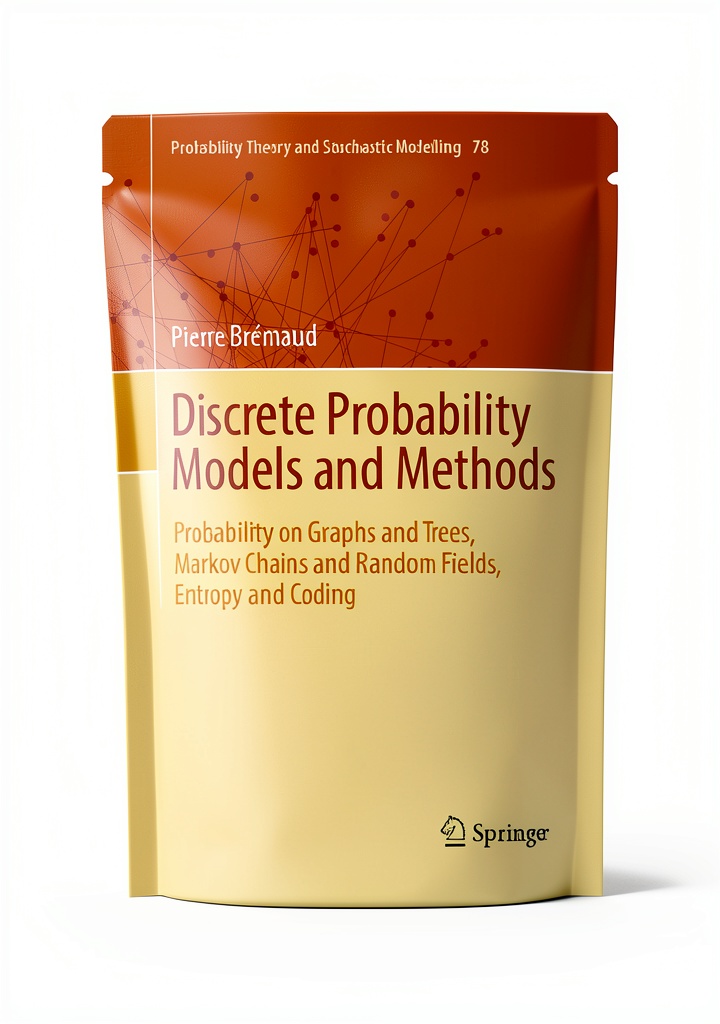
Before diving into the real-world performance, let’s establish what this product actually is. This isn’t a standard reflowable Kindle book where text adjusts to your screen. It’s a Print Replica Kindle edition, which is essentially a PDF-like version of the physical book. This distinction is the single most important factor in your decision.
| Specification | Details |
|---|---|
| Publisher | Springer |
| Series | Probability Theory and Stochastic Modelling |
| Publication Year | 2017 (First Edition) |
| Print Length | 573 pages |
| File Size | 11.3 MB |
| Format | Kindle Print Replica |
| Enhanced Typesetting | No |
| X-Ray | No |
| Text-to-Speech | No |
| Screen Reader | Supported |
| ASIN | B01NC0DWPN |
The 2017 publication date places it as a modern but not cutting-edge text. For core graph theory principles, this is rarely an issue, as the fundamentals are well-established. However, if your research focuses on the very latest algorithmic developments in stochastic graph modelling, you might want to check for a more recent edition or supplementary papers.
Real-World Performance & Feature Analysis
Design & Build Quality (The Digital Equivalent)
When we talk about “build quality” for an ebook, we’re really discussing the quality of the digital typesetting, layout, and file integrity. Springer is known for high production standards, and this carries through. The formulas, graphs, and theorems are rendered with precision. There are no obvious OCR errors or layout glitches that plague some cheaper ebook conversions. The academic integrity of the content is intact, which is the most important aspect. However, the “Print Replica” design is inherently rigid. You’re seeing a scan of the page, which means the text size is fixed. On a positive note, this ensures that every graph, tree diagram, and complex equation is exactly where it’s meant to be, avoiding the formatting nightmares that can occur when mathematical notation is reflowed.
Performance in Real Use: Two Scenarios
Scenario 1: The Graduate Student Cramming for Exams. Imagine you’re a computer science master’s student with exams in two weeks. You need to quickly jump between chapters on Eulerian paths, planar graphs, and Markov chains. On a 10-inch iPad Pro with the Kindle app, this book is excellent. You can zoom in on specific proofs, use the search function to find “Dijkstra’s algorithm” instantly, and carry your entire library to the library. The performance is smooth, and the ability to have multiple books open is a game-changer compared to carrying heavy physical texts.
Scenario 2: The Professional Commuter Doing Light Review. Now, imagine you’re a software engineer brushing up on graph theory concepts during your daily commute on the train, using a Kindle Paperwhite. This is where the Print Replica format shows its weakness. The text is often too small to read comfortably on a 6- or 7-inch screen. Constant pinching and zooming is not a fluid experience on e-ink displays, making it frustrating for sustained reading. The convenience of an ebook is largely lost in this context. This is a critical trade-off that many buyers don’t anticipate.
Ease of Use & Navigation
Navigation is functional but not exceptional. The table of contents is linked, which is essential. The search feature works well for finding specific terms, a significant advantage over a physical book. However, the lack of X-Ray is a missed opportunity for a subject with so many key concepts and named theorems. X-Ray would allow you to see every mention of “NP-complete” or “chromatic number” across the book, which is incredibly useful for studying. The absence of enhanced typesetting means you can’t adjust line spacing or margins, which some readers rely on for better comprehension of dense material.
Durability & Long-Term Value
As a digital product, its durability is perfect—it can’t be damaged, and it’s backed up to your Amazon account. The long-term value, however, depends on your field. The core content of graph theory is timeless, so this book will not become obsolete. The Stochastic Modelling applications are also broadly relevant. For $82, you are paying a premium for the Springer brand and the convenience of a digital format. Unlike a physical book, you cannot resell it. The value is locked into your personal, perpetual use.
Pros & Cons
Pros
- Academic Authority: Springer’s reputation ensures the content is accurate, well-structured, and pedagogically sound.
- Layout Fidelity: Complex mathematical notation and diagrams are displayed perfectly, avoiding formatting errors.
- Portability: A 573-page textbook is always with you on your device, searchable and accessible anywhere.
- Search Functionality: Finding a specific theorem or definition is instantaneous, a huge time-saver over a physical index.
Cons
- Inflexible Format: The Print Replica design means no font size adjustment, making it difficult to read on small screens.
- Premium Price: At over $80, it is significantly more expensive than many other ebooks and even some physical textbooks.
- Missing Kindle Features: The lack of X-Ray and text-to-speech feels like a drawback for a book at this price point.
- Device Dependent: The experience is sub-optimal on standard e-ink Kindles, requiring a tablet or computer for best results.
Comparison & Alternatives
To understand where this book fits, it’s essential to compare it to other options.
Cheaper Alternative: “A First Course in Graph Theory” by Gary Chartrand & Ping Zhang (Dover Publications)
Price: Typically under $20 for a physical copy or ebook.
Value Difference: Dover books are renowned for being inexpensive yet high-quality. This is an excellent introductory text. However, it may not have the same depth or cover the stochastic modelling aspects found in the Springer text. It’s also a more traditional book without the digital searchability.
When to Choose: If you are an undergraduate, a beginner to the topic, or on a tight budget. Choose the Springer book if you need advanced, comprehensive coverage and the specific focus of the Probability Theory series.
Premium Alternative: “Graph Theory” by Reinhard Diestel (5th Edition, Springer)
Price: Often over $100 for a new hardcover. Ebook prices vary.
Value Difference: Diestel’s book is often considered a gold-standard, graduate-level text in graph theory. It’s more advanced and theoretical than the book under review. The value is in its depth and rigor.
When to Choose: If you are a PhD student or a researcher specializing purely in graph theory and need the most comprehensive and advanced reference available. Choose the reviewed book if your needs are broader, encompassing discrete mathematics and its applications to stochastic processes.
Buying Guide / Who Should Buy
Best For Beginners?
Not ideally. Beginners often benefit from a more conversational tone, step-by-step explanations, and a flexible reading format that allows for larger text. The rigid, academic style and dense layout of this Print Replica can be intimidating for someone new to discrete mathematics. A more introductory text or a physical book would be a better starting point.
Best For Professionals & Advanced Students
Yes, this is the target audience. If you already have a foundation in these subjects and need a reliable, portable reference from a trusted publisher, this Kindle edition is excellent. The ability to quickly search for concepts is invaluable for professionals applying graph theory to real-world problems in computer networks, data science, or operations research. The inclusion of stochastic modelling makes it particularly relevant for those in data-driven fields.
Not Recommended For
- Readers who exclusively use small-screen e-ink Kindles: The reading experience will be frustrating.
- Those who rely heavily on text-to-speech or accessibility features: These are disabled for Print Replica formats.
- Budget-conscious students who might need to resell their textbook: The digital format has no resale value.
- Anyone seeking a casual introduction to the topic: The academic tone and price point are not suited for casual learning.
FAQ
Q: Can I read this book on my phone?
A: Technically, yes, through the Kindle app. However, the Print Replica format makes the text very small. You will be constantly zooming and panning, which is not a practical way to read a 573-page academic text. A tablet is strongly recommended.
Q: How does this compare to the physical book?
A: The content is identical. The trade-off is portability and searchability (ebook) versus easier extended reading and resale value (physical). The physical book is better for long study sessions; the ebook is better for reference and mobility.
Q: Is the 2017 publication date a problem?
A: For the core principles of graph theory and discrete math, no. These are well-established fields. If you need the very latest research on specific algorithms, you should supplement this book with recent academic papers.
Q: Is this book worth $82?
A> This is the crucial question. It’s worth it if: 1) You specifically need the authority and content of this Springer text, 2) You will actively use the digital search and portability features, and 3) You primarily read on a tablet or large screen. If you’re unsure, or if this is a secondary reference, it’s a significant investment for a digital file you cannot resell.


 Time Meddlers Book 1 Childrens Time Travel Fiction English
  Springer Graph Theory Problem Book Mathematics Kindle
  Springer Graph Theory Book Statistics Computing Series
  Graph Theory Book Abrazol Publishing Kindle Edition 96 Pages
  Antique Firearms Kindle eBook by Skyhorse 202 Pages
  Graph Theory Book OUP Oxford Academic Mathematics Kindle
  Sports Essays Kindle Edition by Anchor 272 Page Humor Collection
 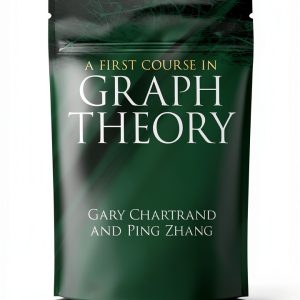 Dover Graph Theory Book Mathematics Study Guide Students
  Graph Theory Kindle Book English Language 141 Pages
  Graph Theory Python Programming Kindle Edition English
  Graph Theory Book Bioinformatics Students OUP Oxford
  Graph Theory Kindle Book English Language 502 Pages