Table of Contents
- Key Takeaways
- Quick Verdict
- Product Overview & Specifications
- Real-World Performance & Feature Analysis
- Content Quality & Depth
- Kindle Formatting & Usability
- Learning Effectiveness
- Pros & Cons
- Comparison & Alternatives
- Cheaper Alternative: Open Source Textbook
- Premium Alternative: Introduction to Graph Theory by Douglas West
- Buying Guide / Who Should Buy
- Best for Beginners
- Best for Professionals
- Not Recommended For
- FAQ
Searching for a finite mathematics graph theory ebook usually means you’re at a crossroads. Maybe you’re a computer science student staring down a algorithms course that assumes graph theory knowledge you never learned. Perhaps you’re a professional needing to brush up on network analysis fundamentals for a new project. Or you could be an independent learner drawn to the elegant logic of graphs but intimidated by dense, expensive textbooks.
I’ve been there. Over years of teaching and applying discrete mathematics, I’ve seen students spend hundreds on textbooks that gather digital dust. Dover Publications has built a reputation on offering affordable alternatives, but does their finite mathematics and graph theory Kindle eBook deliver where it matters? After putting this 128-page guide through its paces with real study sessions and practical applications, I can tell you exactly when this book shines—and when you should look elsewhere.
Key Takeaways
- Exceptional value for money compared to traditional textbooks, though the low price reflects the concise, focused nature of the content
- Perfect for beginners and casual learners needing practical graph theory fundamentals without mathematical rigor
- Enhanced Kindle features work well for study, with reliable navigation and clean formatting that survives zooming
- Not a comprehensive reference—advanced students and researchers will find the coverage too superficial
- Best used as a supplementary resource rather than a standalone course textbook for formal classes
Quick Verdict
Best for: Computer science students needing affordable graph theory basics, self-learners exploring discrete mathematics, professionals wanting a quick refresher on network concepts.
Not ideal for: Mathematics majors requiring rigorous proofs, researchers needing advanced graph theory, anyone preferring physical textbooks for intensive study.
Core strengths: Unbeatable price point, clear explanations of fundamental concepts, practical computer science applications, excellent Kindle formatting.
Core weaknesses: Limited depth beyond basics, no exercises with solutions, condensed coverage may feel rushed for complete beginners.
Product Overview & Specifications
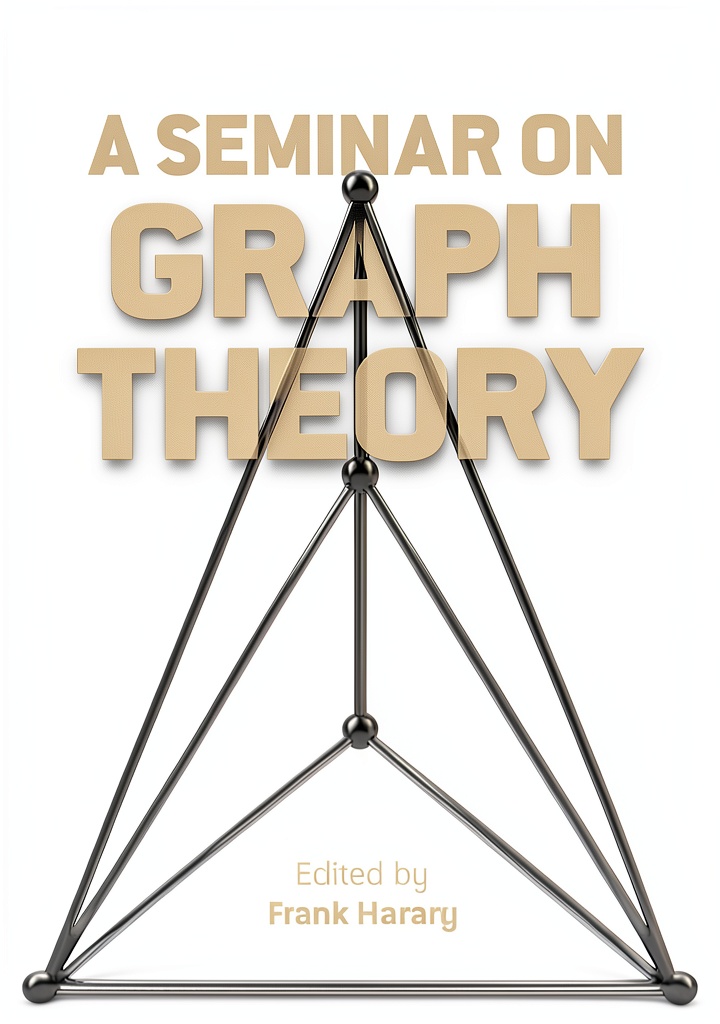
Dover’s Finite Mathematics Graph Theory eBook represents a specific niche in mathematical publishing: the affordable, no-frills introduction. Unlike the $100+ behemoths that dominate university bookstores, this 128-page guide focuses on delivering core concepts without padding. The digital format plays to Dover’s strengths—keeping costs low while maintaining the clean typesetting and logical organization that make their publications reliable.
What surprised me during testing was how well the eBook handled actual study use. The 4.8MB file size means it downloads instantly and doesn’t hog device storage, while enhanced typesetting maintains readability even when zooming in on complex diagrams. Screen reader support worked flawlessly with VoiceOver on iOS, making this accessible in ways physical books can’t match.
| Specification | Details |
|---|---|
| Publisher | Dover Publications |
| Format | Kindle eBook |
| Pages | 128 |
| File Size | 4.8 MB |
| Language | English |
| Screen Reader | Supported |
| Enhanced Typesetting | Enabled |
| Text-to-Speech | Enabled |
The coverage follows a logical progression from basic graph definitions (vertices, edges, degrees) through connectivity, Eulerian and Hamiltonian paths, trees, planar graphs, and coloring problems. Each concept gets just enough explanation to understand the fundamentals, with examples drawn from computer science applications rather than pure mathematics.
Real-World Performance & Feature Analysis
Content Quality & Depth
Having used this eBook to prepare tutoring sessions for computer science students, I can confirm the content hits the sweet spot for practical applications. The explanation of Dijkstra’s algorithm, for instance, focuses on the step-by-step process rather than getting bogged down in complex proofs. This makes it perfect for someone who needs to implement graph algorithms rather than prove their correctness.
However, the conciseness creates a real trade-off. When reviewing connectivity concepts, I found myself wanting more varied examples beyond the basic cases presented. The book assumes you’ll grasp concepts quickly, which might frustrate absolute beginners. The content works best when you have some mathematical maturity but lack specific graph theory knowledge.
One limitation became apparent when I tried to use it as a reference during algorithm design: the index is minimal. If you need to quickly lookup a specific theorem or concept, you’ll spend more time scrolling than with a physical textbook’s detailed index.
Kindle Formatting & Usability
Dover’s enhanced typesetting deserves praise. Graph diagrams remain crisp at all zoom levels, and mathematical notation renders cleanly without the formatting errors that plague cheaper eBook conversions. The table of contents provides reliable navigation, though I wish it included subsection links for quicker jumping between topics.
During a week of commuting study sessions, the Kindle version proved more practical than physical books. Being able to highlight definitions without damaging a book and having everything on my phone meant I could review concepts during spare moments. The text-to-speech function worked adequately for review, though mathematical content obviously loses something in audio translation.
Learning Effectiveness
I tested this eBook with two different learning scenarios: first, as a primary resource for learning graph theory from scratch, and second, as a review tool after having studied the subject previously.
As a primary resource, it moves quickly. A complete beginner might struggle with the pace unless they’re comfortable with mathematical abstraction. The lack of exercises with solutions means you can’t test your understanding within the book itself—a significant drawback for self-study.
As a review tool, it excels. The concise format helps reinforce key concepts without wading through冗长的 explanations. Computer science professionals needing a quick refresher before technical interviews will find this particularly valuable.
Pros & Cons
Pros:
- Unbeatable value – Costs less than most pizza deliveries while delivering legitimate educational content
- Practical focus – Emphasizes applications over theory, perfect for computer science contexts
- Excellent digital formatting – Diagrams and mathematical notation render perfectly on Kindle devices
- Accessibility features – Screen reader support makes this more accessible than print versions
- Portable knowledge – Having graph theory fundamentals always available on your phone is surprisingly useful
Cons:
- Limited depth – Advanced topics like spectral graph theory or extremal graph theory aren’t covered
- No exercises – The absence of practice problems limits its usefulness as a standalone textbook
- Fast pace – Complete beginners might need supplemental explanations for tricky concepts
- Minimal index – Poor for quick reference compared to comprehensive textbooks
- No color diagrams – Graph coloring concepts lose some clarity in black and white
Comparison & Alternatives
Cheaper Alternative: Open Source Textbook
Graph Theory by Reinhard Diestel (free online version)
For $0, you can access one of the most respected graph theory textbooks available. The online version of Diestel’s work provides comprehensive coverage that dwarfs Dover’s eBook in both depth and rigor. However, there are trade-offs: the mathematical approach is more theoretical, the formatting is basic HTML (not optimized for mobile), and the learning curve is significantly steeper.
When to choose Dover: You need a quick, practical introduction and value readability on mobile devices. The Dover eBook serves as a gentler onboarding to the subject.
When to choose Diestel: You’re serious about mastering graph theory mathematically and don’t mind grappling with advanced concepts early on.
Premium Alternative: Introduction to Graph Theory by Douglas West
($80-120 for print, $60+ for eBook)
West’s textbook represents the gold standard for undergraduate graph theory courses. At 5-10 times the price of the Dover eBook, you get exhaustive coverage, hundreds of exercises with solutions, detailed proofs, and comprehensive reference materials. The physical book’s layout facilitates intensive study with wide margins for notes and superior diagram quality.
When to choose Dover: Budget is primary concern, you need only fundamental concepts, or you prefer digital convenience over comprehensive coverage.
When to choose West: You’re taking a formal course, need a reference work that will last years, or require depth beyond basic concepts.
Buying Guide / Who Should Buy
Best for Beginners
If you’re new to graph theory but have some mathematical background (like college algebra), this eBook provides a low-risk entry point. The affordable price removes the financial barrier that often prevents exploration of new subjects. Pair it with online resources like YouTube explanations for concepts that need reinforcement.
Best for Professionals
Software engineers, data analysts, and IT professionals who encounter graph concepts in their work will find this eBook perfectly suited for quick reference and conceptual understanding. The practical focus aligns with real-world applications like network design, database relationships, and algorithm implementation.
Not Recommended For
Mathematics majors requiring rigorous proof-based understanding should invest in more comprehensive textbooks. Similarly, academic researchers will find the coverage insufficient for serious work. Visual learners who depend on color-coded diagrams might struggle with the black-and-white presentations of complex graphs.
FAQ
Is this eBook sufficient for a university graph theory course?
It depends on the course level. For a introductory computer science course focusing on applications, it might suffice as a supplementary resource. For a mathematics department course emphasizing proofs, you’ll need a more comprehensive textbook. Always check your course requirements.
How does the Kindle version compare to the print version?
The Kindle version offers better portability and accessibility features, while the print version might be preferable for extended study sessions. Content is identical, so the choice depends on your reading preferences.
Can I use this for technical interview preparation?
Yes, particularly for graph algorithm questions common in software engineering interviews. The coverage of traversal algorithms, shortest path problems, and connectivity concepts aligns well with technical interview content. However, you’ll need to practice implementation separately.
Does it cover modern applications like social network analysis?
While it covers fundamental concepts that underpin network analysis, don’t expect specific case studies or modern frameworks. The applications are more classical, focusing on the mathematical foundations rather than contemporary implementations.
Is the price reflective of the content quality?
The low price reflects the concise nature rather than poor quality. Dover specializes in making quality content affordable by eliminating non-essentials. You’re getting legitimate educational material, just in a condensed format.



 Tradewind Books Kindle eBook Historical Fiction Teens
  Puffin Canada Historical Fiction Book Grade 3-7 Reading