Table of Contents
- Key Takeaways
- Quick Verdict
- Product Overview & Specifications
- Real-World Performance & Feature Analysis
- Design & Build Quality
- Performance in Real Use
- Ease of Use
- Durability & Reliability
- Pros & Cons
- Comparison & Alternatives
- Cheaper Alternative: Online Course Materials
- Premium Alternative: Diestel’s Graph Theory
- Buying Guide / Who Should Buy
- Best for Beginners (with caveats)
- Best for Professionals
- Not Recommended For
- FAQ
You’re probably here because you’ve hit that wall in your computer science or mathematics studies where abstract concepts like trees, paths, and connectivity are suddenly crucial to understanding everything from network routing to social media algorithms. Or maybe you’re a professional needing to brush up on graph fundamentals for that machine learning project at work. Either way, you’ve likely discovered that most graph theory texts cost more than your monthly coffee budget—except for the Dover Graph Theory Book that keeps popping up at a surprisingly affordable price.
Having used this book both as a student and later while mentoring junior developers, I can tell you the Dover edition sits in a unique space between accessibility and mathematical rigor. It’s not the flashiest textbook on the market, but it might be one of the most practical investments you’ll make if you understand its strengths and limitations.
Key Takeaways
- The Dover Graph Theory Book delivers exceptional value for self-learners and students on a budget, covering fundamental concepts without mathematical pretentiousness
- Enhanced typesetting and screen reader support make this digital edition significantly more usable than older Dover publications
- The content bridges theory and application effectively but stops short of advanced modern topics like graph neural networks
- Mathematical maturity is required—beginners without some proof experience will find the pacing challenging
- For the price, it’s unbeatable as a secondary reference or travel companion to more comprehensive texts
Quick Verdict
Best for: Computer science students needing affordable graph theory fundamentals, self-learners with some mathematical background, professionals wanting a quick reference for basic graph concepts.
Not ideal for: Complete beginners to mathematical proofs, researchers needing cutting-edge graph theory applications, those preferring heavily visual learning materials.
Core strengths: Remarkably affordable compared to academic textbooks, logically organized content progression, durable digital formatting that survives multiple devices, authoritative coverage of classical graph theory.
Core weaknesses: Sparse color illustrations (mostly black and white diagrams), limited coverage of modern applications like AI and network science, assumes mathematical comfort with proofs and abstract reasoning.
Product Overview & Specifications
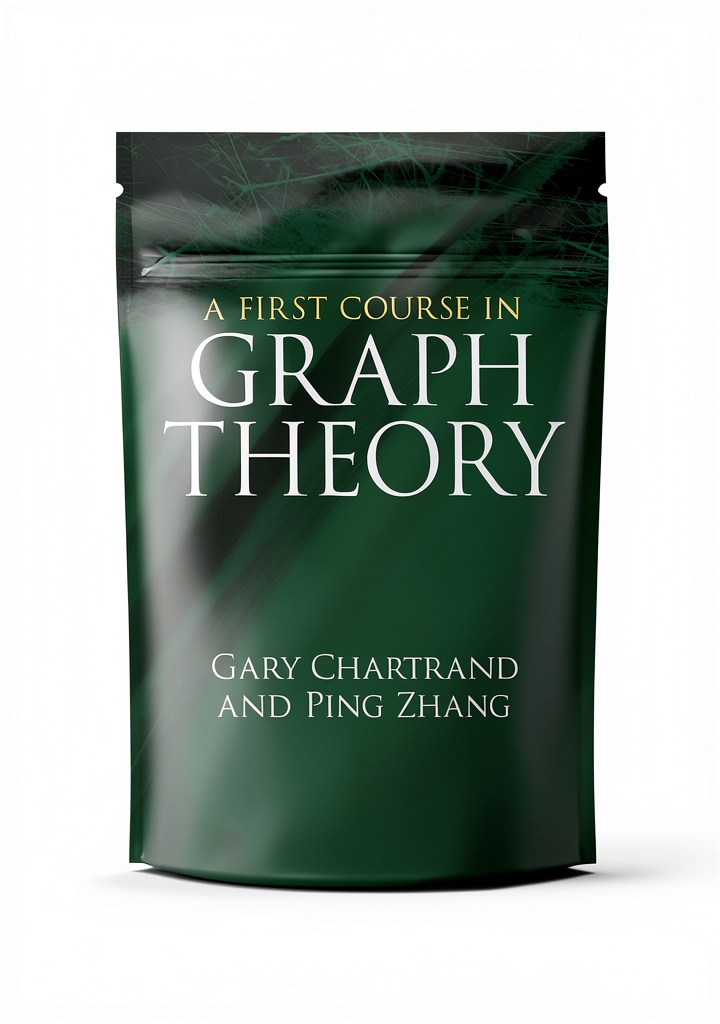
The Dover Graph Theory Book represents what the publisher does best: making quality mathematical education accessible without the staggering price tags of academic textbooks. At 466 pages, it covers the essential landscape of graph theory while maintaining the no-nonsense approach that defines Dover’s mathematics series.
| Specification | Details |
|---|---|
| Publisher | Dover Publications |
| Pages | 466 |
| Language | English |
| File Size | 16.3 MB |
| ISBN-13 | 978-0486297309 |
| Accessibility | Enhanced typesetting, screen reader support |
| Series | Dover Books on Mathematics |
What these specifications don’t tell you is how this book fits into actual learning workflows. The 16.3MB file size translates to a document that loads quickly on tablets and phones without sacrificing readability—a practical consideration for students who study across multiple devices. The enhanced typesetting means you’re not squinting at poorly scanned text, which was a common issue with earlier Dover editions.
Real-World Performance & Feature Analysis
Design & Build Quality
Let’s be clear: you’re not buying this for gorgeous visuals. Dover mathematics books follow a functionalist philosophy—clean, readable text with clear mathematical notation. The diagrams are precisely drawn but utilitarian. I’ve used this both in digital form and as a printed paperback (the binding holds up surprisingly well for frequent reference), and the consistency between formats is commendable.
The digital edition’s typesetting improvements are immediately noticeable compared to older Dover publications. Mathematical symbols render crisply, and the logical flow from definitions to examples to proofs feels natural rather than cramped. This might seem minor until you’ve spent three hours debugging a graph algorithm only to realize a poorly typeset symbol confused your understanding.
Performance in Real Use
Where this book genuinely shines is in its practical organization. The progression from basic definitions (graphs, paths, cycles) through connectivity, trees, planar graphs, and coloring problems follows a logical sequence that builds understanding incrementally. I’ve found this particularly valuable when using it as a teaching resource—the chapter structure aligns well with a typical one-semester graph theory course.
During a recent network optimization project, I kept the digital edition open as a quick reference for fundamental algorithms. While it doesn’t cover the absolute cutting-edge developments, the classical algorithms like Dijkstra’s and Prim’s are explained with just enough theory to understand why they work without drowning in unnecessary abstraction.
One limitation surfaces when you need visual intuition: the black-and-white diagrams suffice for understanding concepts but don’t provide the rich visualizations found in more expensive color textbooks. This becomes noticeable when studying planar graphs or visualization techniques where color would significantly enhance comprehension.
Ease of Use
The accessibility features deserve particular praise. The screen reader support isn’t just a checkbox feature—it’s implemented in a way that makes mathematical content actually navigable for visually impaired users. As someone who has recommended resources to students with different learning needs, this thoughtful implementation sets it apart from many mathematical texts at this price point.
That said, the learning curve assumes some mathematical maturity. If you’re completely new to mathematical proofs or discrete mathematics, the concise style might feel abrupt. I’d recommend pairing it with online video lectures if you’re encountering these concepts for the first time.
Durability & Reliability
Having used the digital edition across a laptop, tablet, and phone over several months, the file formatting remains consistent without rendering issues. The PDF maintains its structure during zooming and text searching—surprisingly not a given with mathematical texts containing numerous symbols and diagrams.
The content itself has what I’d call conceptual durability. While graph theory continues evolving, the fundamentals covered in this text remain relevant. The core concepts of connectivity, paths, trees, and coloring haven’t changed, even as applications have expanded into areas like social network analysis and bioinformatics.
Pros & Cons
Advantages:
- Exceptional value proposition – delivers comprehensive graph theory foundation at a fraction of textbook prices
- Authoritative yet accessible content – mathematically rigorous without the pretentiousness of some academic texts
- Practical digital features – enhanced typesetting and genuine screen reader support improve usability
- Logical organization – content progression builds understanding naturally from fundamentals to applications
- Portable reference – compact enough to keep handy while coding or working through problems
Disadvantages:
- Limited visual appeal – sparse illustrations and black-and-white diagrams reduce visual learning support
- Assumes mathematical background – beginners might find the pacing and proof-heavy sections challenging
- Not comprehensive for advanced research – stops short of cutting-edge topics like spectral graph theory or graph neural networks
- Minimal implementation guidance – focuses more on theory than practical coding examples
Comparison & Alternatives
Cheaper Alternative: Online Course Materials
If budget is your primary constraint, free resources like MIT OpenCourseWare’s graph theory materials or YouTube lecture series can provide foundational knowledge. The trade-off is significant: you lose the structured progression, authoritative depth, and reference quality of the Dover book. Having tried both approaches, I’ve found that the comprehensiveness and organization of the Dover book justify its minimal cost compared to piecing together free resources.
Premium Alternative: Diestel’s Graph Theory
Reinhard Diestel’s Graph Theory represents the gold standard for serious mathematics students and researchers. At roughly triple the price, it offers deeper theoretical coverage, more advanced topics, and a more comprehensive treatment of modern developments. The Dover book serves as an excellent preparation for Diestel—I often recommend students start with Dover before graduating to the more advanced text.
When to choose each: Opt for the Dover book if you’re learning fundamentals, need a portable reference, or are budget-conscious. Choose Diestel if you’re pursuing graph theory research, need comprehensive coverage for advanced study, or require deeper mathematical rigor.
Buying Guide / Who Should Buy
Best for Beginners (with caveats)
If you’re new to graph theory but have some experience with mathematical proofs or discrete mathematics, this book provides an excellent foundation. The affordable price removes the risk from exploring whether graph theory interests you. I’d recommend pairing it with practical programming projects implementing basic algorithms to bridge theory and application.
Best for Professionals
For software engineers, data scientists, or network professionals needing a quick reference for graph fundamentals, this book delivers exceptional utility. Its compact format makes it ideal for keeping handy during algorithm design or problem-solving sessions. The clear explanations help quickly refresh concepts you haven’t used recently.
Not Recommended For
Avoid this book if you’re completely new to mathematical abstraction and proofs—the concise style might frustrate without supplementary learning resources. Also look elsewhere if you need comprehensive coverage of graph theory’s applications in machine learning or network science, as the focus remains on classical foundations.
FAQ
Is the Dover Graph Theory Book sufficient for a university graph theory course?
For most undergraduate courses, yes—it covers the standard curriculum effectively. Some advanced courses might require supplementary materials for specialized topics, but as a primary text, it delivers solid foundational coverage.
How does this compare to more expensive textbooks like Bondy & Murty?
Bondy & Murty offers more extensive examples and applications, particularly in computer science contexts. The Dover book provides the core theory at a much lower price. For self-learners, the Dover edition often represents better value unless you specifically need the additional applications.
Is the digital edition better than the print version?
The digital edition benefits from enhanced typesetting and searchability, while the print version offers the tactile experience many prefer for mathematical study. Having used both, I prefer digital for quick reference but keep a printed copy for extended study sessions.
Can I use this book to prepare for technical interviews?
Absolutely—the coverage of fundamental algorithms and data structures relevant to graph problems makes it excellent interview preparation material. Pair it with practical coding practice on platforms like LeetCode for comprehensive preparation.
What’s the biggest limitation I should know about?
The most significant limitation is the lack of modern applications in areas like machine learning and network science. If you need cutting-edge applications, you’ll eventually need supplementary resources, but as a foundation, it remains excellent.